
Lead: what it is, the types, and how to turn one into a customer
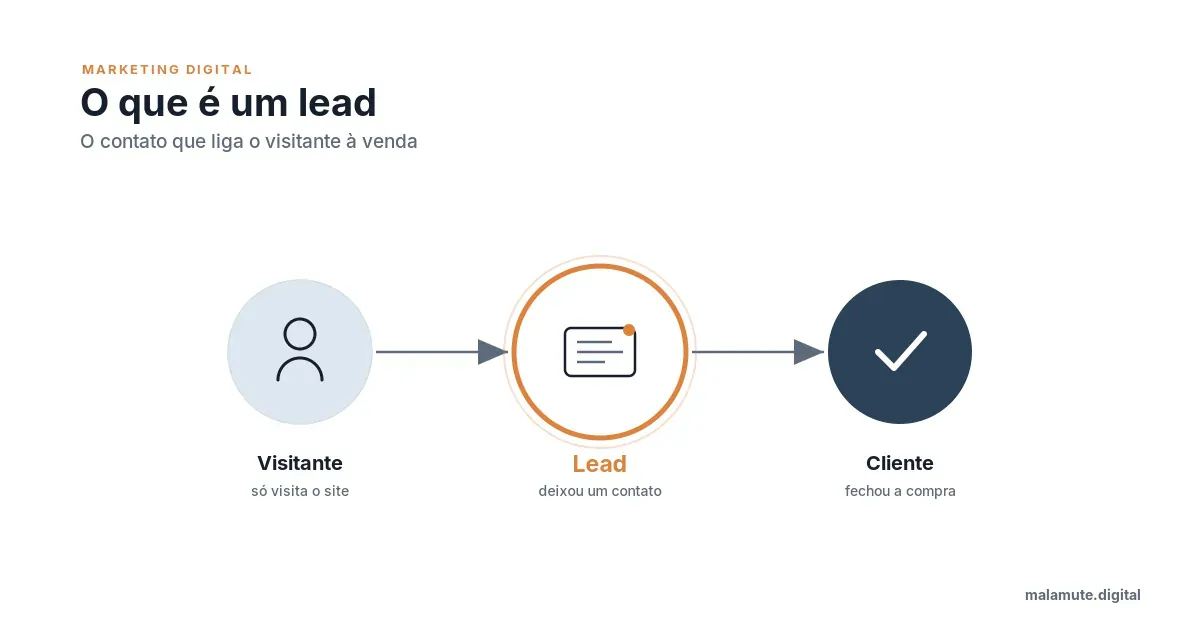
Quick answer: a lead is a potential customer who has shown interest in your product or service and left a way to get in touch, such as an email, phone number or message. Leads usually appear when someone fills out a form, downloads a resource or reaches out on WhatsApp. It is the first step between the visitor and the sale.
What is a lead?
A lead is any person or company that has shown interest in what you sell and provided contact details in exchange. The word comes from English and means something like a clue or a tip: in marketing and sales, it is the clue that someone may buy from you.
The difference between a visitor and a lead is that exchange. A thousand people can read your site and leave without a trace. The moment one of them fills out a form, requests a quote or sends a message, they become a lead: someone you can talk to and guide toward a purchase.
In digital marketing, generating leads is the goal of most top-of-funnel work. A site that gets a lot of visits but generates no leads is letting demand walk away.
Lead, visitor, prospect and customer: what is the difference?
These terms show up together and get mixed up. A simple way to separate them follows how far the person has moved toward a purchase:
- Visitor: knows your content, but is still anonymous. You have no way to reach them.
- Lead: left contact details and showed interest. Now you can communicate.
- Prospect: is the lead that passed a screening and has a profile that fits a purchase, with a matching need and timing.
- Customer: completed the purchase.
Not every lead becomes a prospect, and not every prospect becomes a customer. The job of sales is to move as many people as possible from one stage to the next.
The types of lead (IQL, MQL and SQL)
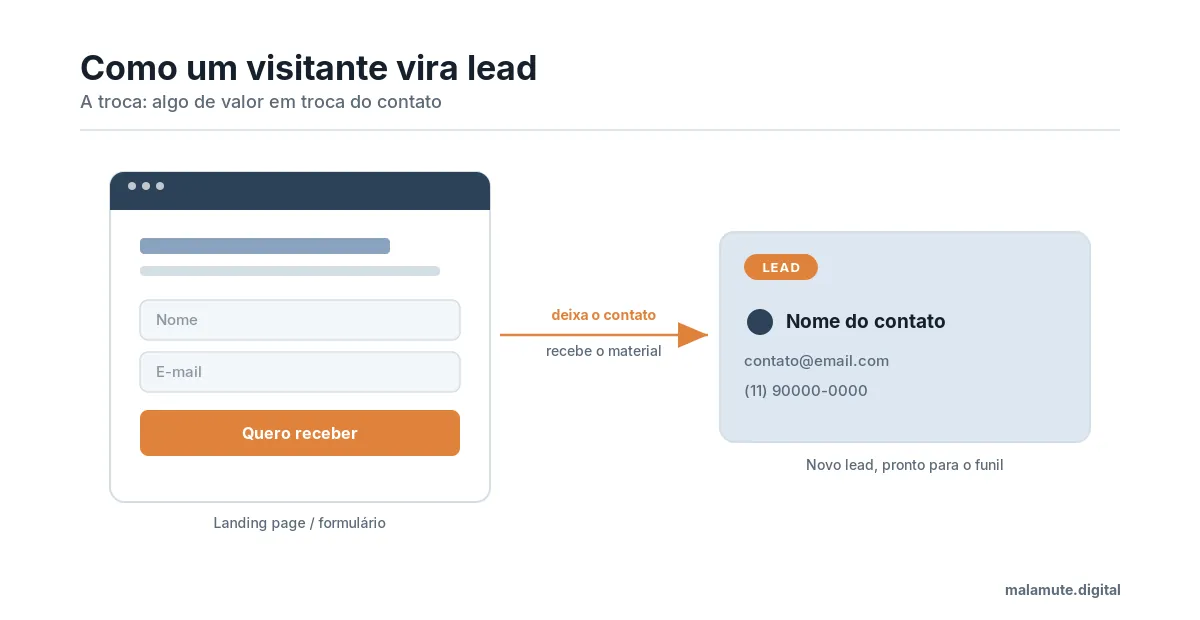
Not every lead is at the same stage of the buying decision. The most common classification follows how far the person has matured in that decision:
- IQL (Information Qualified Lead): is at the beginning, trying to understand a problem. They consume educational content and are not thinking about buying yet.
- MQL (Marketing Qualified Lead): already engages consistently with deeper materials, such as comparisons and case studies. This shows the interest is real.
- SQL (Sales Qualified Lead): is ready to talk to the sales team and evaluate a proposal. Here SQL means Sales Qualified Lead, not the database language with the same name.
Another common way to classify leads is by temperature: cold (still distant), warm (researching) and hot (close to deciding). Both approaches serve the same purpose: directing the right effort to each contact.
How a person becomes a lead
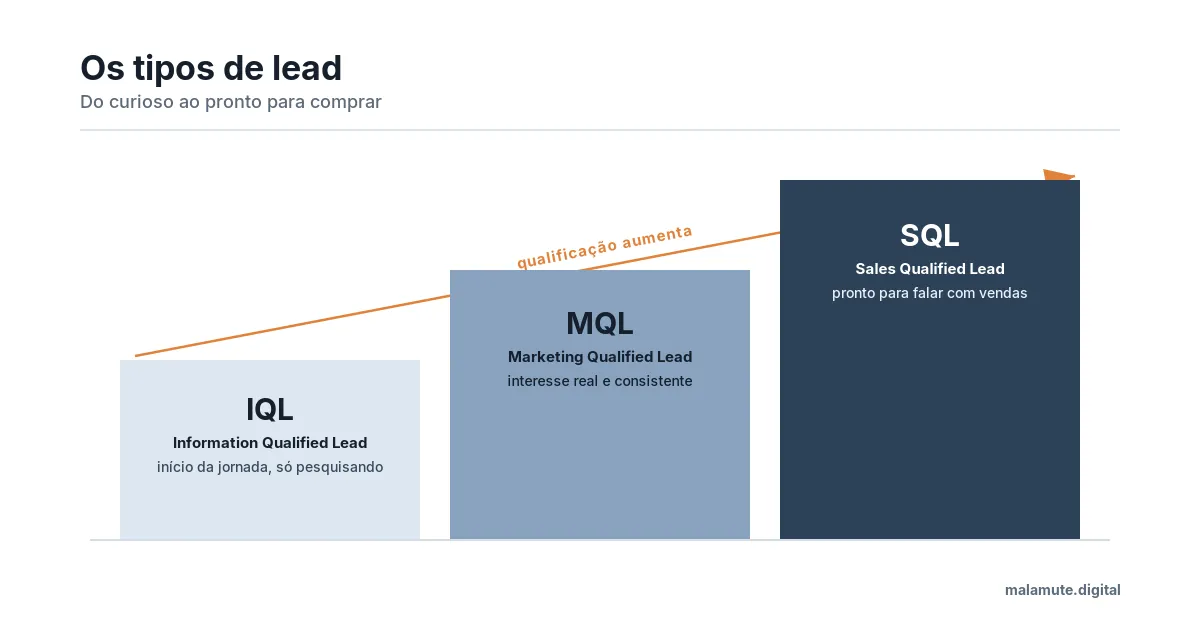
Turning a visitor into a lead happens when you offer something of value in exchange for their contact details, usually on a landing page, a page built only to capture that contact. The most common paths:
- Downloading a valuable resource, such as an ebook, guide or spreadsheet.
- Signing up for a newsletter, webinar or waitlist.
- Requesting a quote, demo or sample.
- Messaging via WhatsApp, a form or social media.
The more relevant the offer is to your audience, the better the quality of the lead it attracts. A generic bait brings volume and little real interest. A bait tied to the problem you solve brings fewer people and more of the right people.
How to generate leads
Generating leads means filling the top of the funnel with new contacts on an ongoing basis. That comes from a few complementary fronts, and each one fits a different moment better:
- SEO and content: get your company found when someone searches for the problem on Google, bringing in contacts continuously. That is the work of content production and SEO.
- Paid media: speeds up lead intake when you need volume fast or are validating an offer, through paid media management.
- Social media and referrals: keep the brand present and use existing customers to bring in new contacts.
What separates strong lead generation from weak lead generation is quality, not just volume. Positioning the company for the terms people search when they are already close to buying brings more qualified contacts, who move through the funnel faster.
How to qualify a lead
Qualifying means separating who has a real chance of buying from who is only researching. An objective filter answers four questions about the lead: do they match your ideal customer profile, do they have a need you solve, can they decide or influence the purchase, and are they close to a buying moment. Whoever passes those points goes to sales. Whoever does not goes back to nurturing, receiving content until they mature.
That filter keeps the sales team from spending time on contacts that were never going to close, and it is what turns lead volume into revenue.
How much does a lead cost?
Cost per lead (CPL) is how much you spend, on average, to generate one contact. You calculate it by dividing campaign spend by the number of leads it brought in. If you invested R$ 1,000 and generated 50 leads, the CPL was R$ 20.
There is no single “right” CPL. It varies a lot by industry, channel and lead quality. A cheap lead that never buys is expensive in the end, and a more expensive lead that closes often can be well worth it. The number that really matters is customer acquisition cost: how much you spend to turn those leads into sales.
Where the lead sits in the sales funnel
The lead is the bridge between attracting and selling. It is born at the top of the sales funnel, when the visitor leaves a contact, moves to the middle as it is qualified, and reaches the bottom when it becomes a sales opportunity. Knowing where each lead sits in the funnel is what lets you choose the right next action.
It is worth measuring this accurately. Without conversion tracking, you do not know which channel each lead came from or how much it cost, and you end up deciding in the dark.
Common mistakes when working with leads
- Treating every lead the same, without separating who is researching from who wants to buy.
- Taking too long to reply to a lead that just arrived, when interest is at its peak.
- Focusing only on volume, generating many contacts with the wrong profile that clog sales.
- Not nurturing the lead that is not ready yet, letting it go cold and disappear.
- Not measuring lead source, which makes it impossible to know what actually works.
Frequently asked questions
What does lead mean?
Lead comes from English and means a clue or a tip. In marketing and sales, it is the potential customer who showed interest in your product or service and left a contact, such as an email, phone number or message.
What is the difference between a lead and a customer?
The lead showed interest and left a contact, but has not bought yet. The customer is the one who completed the purchase. Between the two is the work of qualifying and guiding the lead to the sale.
What are the types of lead?
The most common classification is by qualification level: IQL (start of the journey), MQL (consistent interest, qualified by marketing) and SQL (ready for sales). Another common approach is by temperature: cold, warm and hot.
How much does a lead cost?
It depends on the industry, the channel and the quality. Cost per lead (CPL) is spend divided by the number of leads generated. More important than CPL on its own is how much it costs to turn those leads into customers.
Are lead and prospect the same thing?
No. The lead showed interest and left a contact. The prospect is the lead that already passed a screening and has a profile, need and timing that fit a purchase. Every prospect is a lead, but not every lead becomes a prospect.
References
- RD Station. Leads: o que são e como gerá-los para aumentar as vendas. https://www.rdstation.com/blog/marketing/leads/
- Serasa Experian. O que é lead e estratégias para converter. https://www.serasaexperian.com.br/conteudos/o-que-e-lead/
- HubSpot. Sales blog, lead guide. https://br.hubspot.com/blog/sales
- Pipedrive. Blog, what is a lead. https://www.pipedrive.com/pt/blog
Also available in: Português · Italiano · Español
Want to turn organic search into revenue?