
Sales Funnel: How to Attract Visitors and Turn Them Into Customers
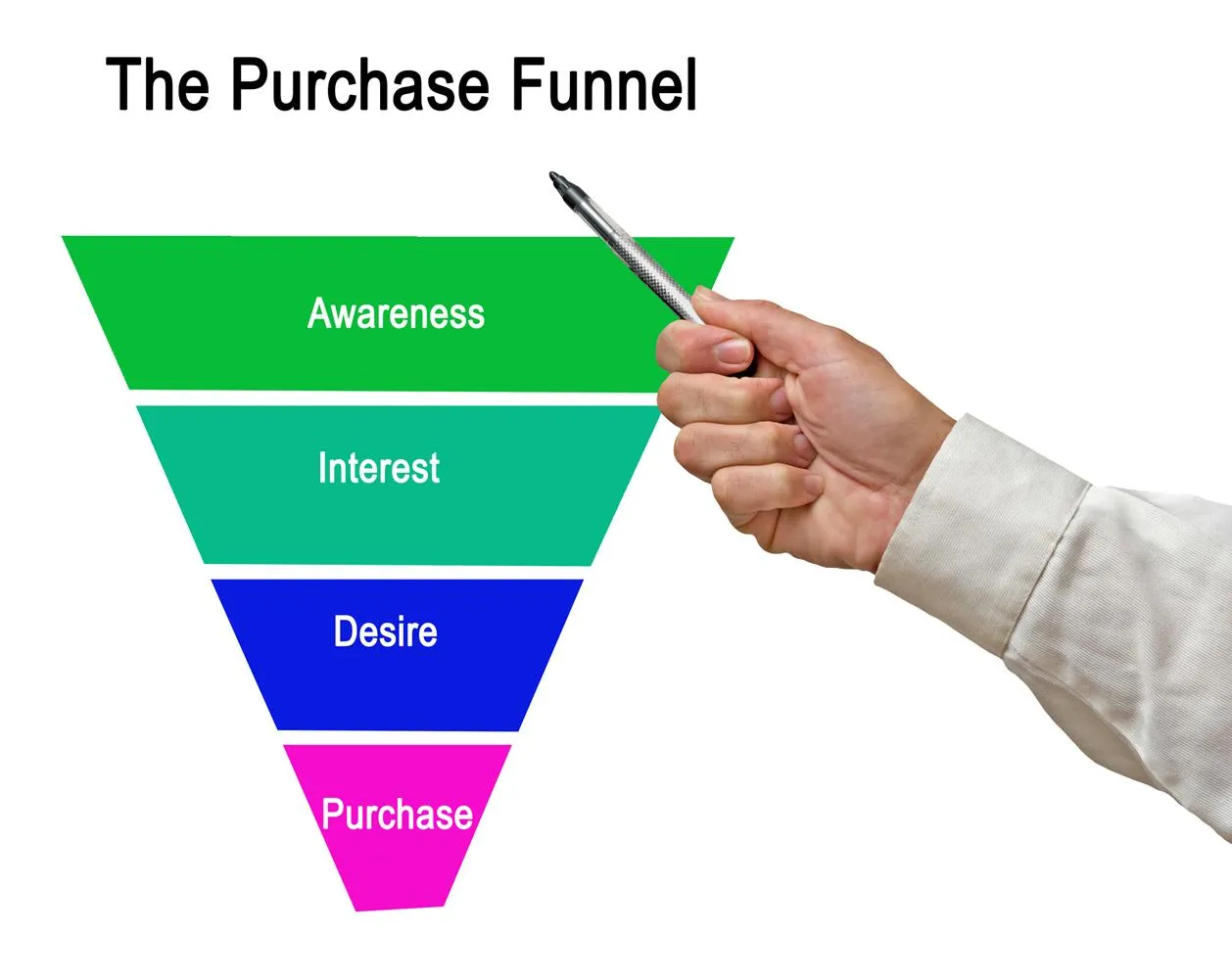
Quick answer: a sales funnel is a visual representation of the customer journey, from first contact with your company to purchase. It’s divided into three stages, top, middle and bottom, which correspond to learning about a problem, considering solutions and deciding to buy. It helps you organize, forecast and grow your sales.
What Is a Sales Funnel?
A sales funnel is the model that shows, in stages, the path a person takes from discovering your company to closing a deal. It’s also called a pipeline. The idea is simple: not everyone who learns about your product buys right away. People go through a process, and the funnel organizes that process into clear phases so you know what to do in each one.
Picture someone who’s never heard of your company. First they realize they have a problem. Then they research ways to solve it. Next they compare who offers the solution. Only then do they decide to buy. The sales funnel names each of those moments and defines which action on your part moves the person to the next one.
Why the Funnel Has This Shape
The name comes from the shape: wide at the top and narrow at the bottom. Many people enter at the top, curious or just researching, and a smaller share reaches the bottom and buys. At each stage, some people give up, get distracted or realize it isn’t the right time. That’s normal and expected. The job of whoever manages the funnel is to reduce those losses where they hurt most and understand why they happen.
That shape also explains an important calculation for your business. If you know how many people enter the top and the conversion rate at each stage, you can estimate how many sales you’ll close. That’s what makes sales predictable instead of dependent on a lucky month.
What a Sales Funnel Is For
The funnel solves practical, everyday sales problems:
- Predictability: with numbers for each stage, you can project how many sales the month will bring and how much you need to invest at the top to hit your target.
- Marketing and sales alignment: marketing knows how many leads it needs to deliver and at what quality, and the sales team knows what to do with them.
- Finding bottlenecks: the funnel shows where people get stuck. If many people reach the middle and vanish, the problem is how you qualify and nurture those leads.
- Data-driven decisions: instead of “this month was weak”, you see “proposal-to-close conversion dropped” and act on the right spot.
The metrics that really help you see this are few: volume entering the top, conversion rate at each stage, cost per lead and how long a lead takes to become a customer. With those four numbers, you know where you’re losing sales and how much you need to invest to grow.
The Sales Funnel Stages: Top, Middle and Bottom
The most widely used model divides the funnel into three stages, known as ToFu (top of funnel), MoFu (middle of funnel) and BoFu (bottom of funnel).
| Stage | What to do | Who they are |
|---|---|---|
| Top (ToFu) | Attract and spark discovery | Visitors |
| Middle (MoFu) | Qualify and nurture | Leads |
| Bottom (BoFu) | Convert and close | Customers |
Top of the Funnel (ToFu): Attract and Spark Interest
At the top are people who just realized they have a problem but don’t yet know how to solve it. They’re learning. Your goal here is to attract visitors and turn them into leads. Educational content works well: blog articles, social posts, videos and free resources. The common mistake is trying to sell at this point, when the person hasn’t even understood their own problem.
Middle of the Funnel (MoFu): Qualify and Nurture
In the middle are people who understand the problem and started comparing solutions. These leads need deeper information to move forward: case studies, webinars, spreadsheets, comparisons and emails with relevant content. The goal is to qualify, separating people with the right profile and timing to buy from those just researching. It’s the most neglected stage, which is why so many leads go cold and never come back.
Bottom of the Funnel (BoFu): Convert and Close
At the bottom are people who’ve decided to solve the problem and are evaluating whom to buy from. This is where proposals, demos, free trials, social proof, guarantees and terms come in. The goal is to turn the opportunity into a sale. Small tweaks here tend to have an outsized effect: a conversion page that makes the next step clear, a fast reply to incoming leads and an unambiguous offer. Many companies have traffic and a good proposal but lose the sale because of slow responses or a confusing page.
What About Post-Sale?
Some models add a stage after purchase focused on retention and loyalty. It makes sense for recurring businesses or those that live on referrals. A satisfied customer buys again and brings others, which lowers the cost of filling the top of the funnel. If your model depends on repeat purchases, treat post-sale as part of the funnel, not an afterthought.
Sales Funnel, Marketing Funnel and Buyer Journey: What’s the Difference?
These three terms show up together and cause confusion. The buyer journey is the path the customer takes from their own point of view, as someone solving a problem. The funnel is how your company sees and organizes that path so it can act on it.
In practice, many companies separate the marketing funnel, responsible for attracting and qualifying (top to middle), from the sales funnel, responsible for closing (bottom). A simple way to see it: marketing fills and warms the funnel, sales harvests what’s ripe. In smaller businesses, both work as one continuous process, which makes alignment easier and keeps leads from getting lost in the handoff between teams.
How to Build a Sales Funnel Step by Step
Building a funnel doesn’t require expensive tools or a big team. It requires clarity about your process. A path that works for most companies:
- Map your real customers’ journey. Talk to people who’ve already bought and learn how they found you and what made them decide.
- Define your funnel stages. Use top, middle and bottom as a base and adapt the names to your reality (for example: visitor, lead, opportunity, customer).
- Set what moves a lead from one stage to the next. Make clear which action on your part and which signal from the customer mark each transition.
- Choose where to track it. You can start in a spreadsheet and move to a CRM when volume justifies it. At first, prefer the simplest tool that does the job over full platforms you won’t fully use.
- Create what feeds each stage. Content to attract at the top, supporting material to qualify in the middle and a clear offer to convert at the bottom.
- Measure and adjust. Track how many people enter and advance at each stage, and fix wherever the drop-off is biggest.
How to Fill the Top of the Funnel (Where Most Companies Get Stuck)
Here’s the point almost no funnel content explains. Building the funnel is only half the job. If nobody enters the top, the rest doesn’t happen. A well-designed funnel with an empty top doesn’t produce a single sale.
Filling the top is demand generation work, and it comes from three complementary fronts:
- SEO and content: get your company found when people search on Google, bringing in visitors continuously without paying per click.
- Paid media: speeds up the flow of people into the funnel when you need volume fast or are validating an offer.
- Social media and referrals: keep the brand present and leverage existing customers to bring in new leads.
The right mix depends on where you are. If you need immediate results, start with paid media while SEO matures. If you want medium-term predictability, invest in content so you don’t depend only on ads.
One caveat: not all traffic is equally valuable. SEO pays off most when it ranks the company for the purchase-intent terms people use when they’re close to buying, not just generic searches from the merely curious. Ranking for the right keyword brings in people already in the middle or bottom of the funnel, closer to a decision.
Real Example: AllenFix Group
AllenFix Group, a manufacturer of custom industrial bolts and fasteners, is a case in point. When the SEO work started, the site brought in about 500 organic clicks a month. Instead of chasing volume for its own sake, the priority was ranking for the products’ commercial-intent keywords, the terms a technical buyer types when they already know what they need: A325 bolt, ASTM A325 structural bolt, threaded rod and J anchor bolt. These are searches from people specifying or quoting a product, not just researching the topic. With the strategy focused on those terms, organic traffic went from 500 to around 6,000 clicks a month, feeding the funnel with already qualified demand.
What’s the Difference Between a CRM and a Sales Funnel?
This question comes up a lot, so let’s separate the two. The sales funnel is the model: the design of the stages and the strategy behind them. The CRM is the tool where you record and track each lead within those stages. You can have a funnel without a CRM, using a spreadsheet, but a CRM helps as volume grows, because it organizes contacts, reminds you of follow-ups and shows each stage’s numbers automatically. In short: the funnel is the strategy, the CRM is where you execute and control it.
Common Mistakes When Building a Sales Funnel
Some mistakes repeat themselves and cost sales:
- Trying to sell at the top, to people still researching who haven’t understood their own problem.
- Abandoning the middle of the funnel, letting leads go cold with no follow-up.
- Building the funnel and forgetting to fill it, with no steady source of new leads.
- Measuring nothing, which makes it impossible to find the real bottleneck.
- Copying another company’s funnel without adapting it to your own buyer journey.
The costliest is usually the third. It’s common for a company to spend time designing stages and configuring tools while leaving the top with no traffic source. The funnel looks great and stays empty. Before refining the stages, make sure new people come in every month.
Frequently Asked Questions
What are the 3 stages of a sales funnel?
The three stages are top (ToFu), middle (MoFu) and bottom (BoFu). The top attracts and sparks interest, the middle qualifies and nurtures leads and the bottom converts the opportunity into a sale.
What’s the difference between a CRM and a sales funnel?
The sales funnel is the strategy that organizes the customer journey into stages. The CRM is the tool where you record and track each lead within those stages. One is the model; the other is where you run it.
What are the 6 stages of a sales funnel?
Some models break the funnel into more phases, for example: visitor, lead, qualified lead, opportunity, customer and post-sale. It’s a more granular view of the same three big stages, useful for companies with longer sales cycles.
How do I organize a sales funnel?
Map your customer journey, define the stages, set what moves a lead from one to the next, track everything in a spreadsheet or CRM, create what feeds each phase and follow the numbers to fix wherever the drop-off is biggest.
Are a sales funnel and a marketing funnel the same thing?
Not exactly. The marketing funnel handles attracting and qualifying, from top to middle. The sales funnel handles closing, at the bottom. In smaller companies, both work as one continuous process.
Fill and Organize Your Funnel
A funnel only generates sales when new people enter the top every month and every stage is closely tracked. It’s end-to-end work of attracting, qualifying and converting, and it starts with ensuring qualified demand at the entrance.
Malamute Digital helps fill the top of your funnel with qualified traffic and structure the stages all the way to the sale. Explore our digital marketing services or start with SEO consulting.
References
- Sebrae Santa Catarina. O que é funil de vendas e como aplicar na sua empresa (in Portuguese). Available at: sebrae-sc.com.br
- RD Station. O que é o Funil de Vendas e como montar o da sua empresa (in Portuguese). Available at: rdstation.com
- Salesforce. What is a sales funnel. Available at: salesforce.com
- HubSpot. Sales funnel: strategies, stages and how to manage it. Available at: hubspot.com
Also available in: Português · Italiano · Español
Want to turn organic search into revenue?