
SEO for Beginners: What Is Search Engine Optimization?
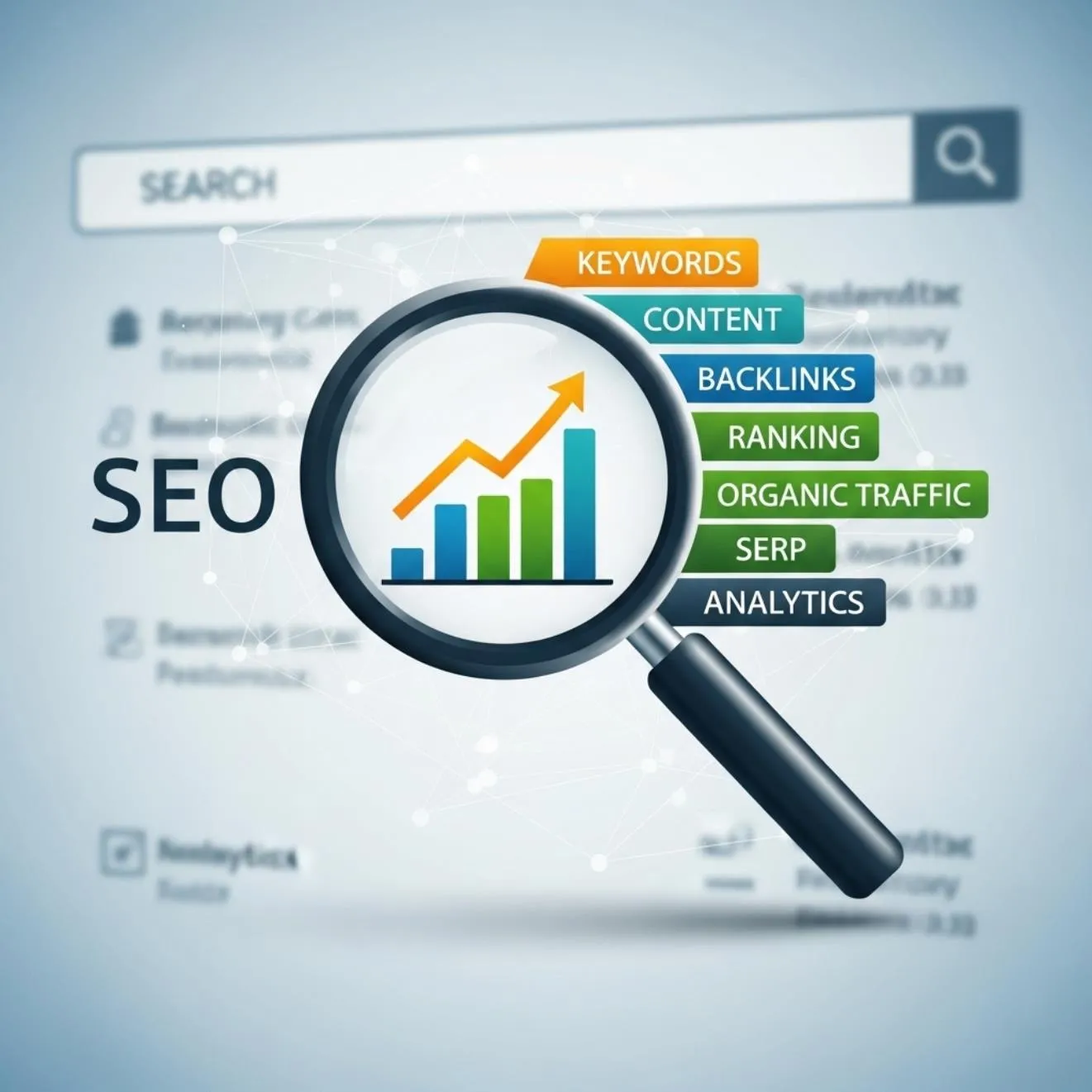
SEO is the work that gets your site to the top of Google when a customer searches for something you sell, and the best part: you don’t have to pay for ads.
It’s like putting your shop on the busiest street in the world, right when your ideal customer is walking by. For your business, that means more visibility, credibility and sales.
What Is SEO?
SEO stands for Search Engine Optimization. In practice, it’s a set of improvements made to your site and your online presence so Google understands you’re the best answer to a customer’s search.
When someone searches for “italian restaurant in chicago” or “financial consulting for small businesses”, Google analyzes thousands of sites to decide who deserves the top positions. SEO is the work of convincing Google that the answer is you.
That covers everything from your site’s technology to the content you publish and the reputation your brand builds online. It’s a strategy that brings marketing and business together to generate real financial results.
How SEO Works (and How It’s Evolving)
To understand SEO, picture Google’s process in three simple steps:
- Reading: first, Google’s bots read every page on your site, as if leafing through a book to understand the main subject.
- Organizing: after reading, Google catalogs your pages in a gigantic digital library, a process called indexing. Good technical SEO makes sure your “book” is easy to read and catalog.
- Ranking: when a customer searches, Google goes to that library and picks the best books (sites) on the subject. Content quality, site speed and “recommendations” from other sites (backlinks) determine your place on the shelf.
But today, just showing up on Google isn’t enough. Search is also happening inside AI tools like ChatGPT and Gemini, which is why the market now talks about GEO, generative engine optimization: making sure AI cites your business in its answers. And whatever the channel, the goal isn’t more visitors; it’s the right visitors, the ones who become customers and make your business grow.
To measure that growth, we use clear indicators:
- KPIs (Key Performance Indicators): the numbers that show whether the strategy is on track, like organic traffic volume (free visits) and the number of leads (contacts from potential customers).
- ROI (Return on Investment): put simply, for every dollar invested in SEO, how much came back as profit?
- CAC (Customer Acquisition Cost): how much, on average, it cost to win each new customer through Google. The goal is to keep that as low as possible.
Expert tip: connecting all of these points, technical work, content and financial results like ROI and CAC, is complex. That’s where having a marketing right hand becomes vital: a partner who understands both business and SEO can turn the data into smart decisions. Malamute Digital was built to be that partner, making sure your SEO investment becomes real growth.
Why SEO Matters for Your Business
For a small or midsize business, investing in SEO isn’t a luxury; it’s a strategy for survival and growth. Here’s why:
- Customers who already want to buy: unlike an ad that interrupts, SEO attracts people actively looking for your solution. They already intend to buy, which makes the sale much easier.
- Credibility and trust: people trust Google’s organic results more than paid ads. Showing up at the top positions your brand as an authority.
- An asset for your company: ads work while you pay. SEO builds an asset. A well-ranked page can generate sales for years at a very low maintenance cost. It’s like buying commercial property instead of renting.
- Free market intelligence: SEO tools show exactly what your customers search for, their biggest questions and pain points. That information is gold and can even guide new products.
The 4 Essential Parts of an SEO Strategy
A good SEO strategy rests on four pillars. Think of them as the stages of building a strong, safe house.
Technical and On-Page SEO: Getting the House in Order
This is the foundation. If your site’s structure is confusing, slow or insecure, nothing else will work properly. That includes making sure the site loads fast, works perfectly on mobile and is secure for users (the familiar HTTPS padlock).
Expert tip: this part is purely technical and involves code, servers and complex settings. Business owners shouldn’t spend their time on it. Having a partner take care of this foundation is essential. At Malamute Digital, we offer website development and hosting, making sure your technical base is flawless so SEO can take off.
Keyword Research: Speaking Your Customer’s Language
Here, we discover the exact words and phrases your customers type into Google. There’s no point calling your service a “logistics optimization solution” if your customer searches for “cheap shipping company”. Targeting specific terms, like “men’s road running shoes”, attracts a much more qualified audience than the generic term “shoes”. Learn more in our guide to keyword research.
Content: The Answer Your Customer Is Looking For
With the right keywords, we create content that answers your customer’s questions. Whether it’s a blog post, a product description or a video, the goal is to be the best, most complete answer they can find. Google rewards content that is genuinely useful.
Off-Page SEO: Building Your Online Reputation
Off-page SEO covers everything done outside your site to improve your reputation. The main lever is link building.
- Quality backlinks: when a relevant, trustworthy site links to yours, it passes along a vote of confidence and authority. A single link from a major news site can be worth more than hundreds of links from small sites.
- How to earn links: create great content people want to share, partner with other companies on guest posts, list your business in important local directories and take part in industry events.
- Google Business Profile: for local businesses, optimizing your Google Business Profile is the most important off-page SEO move. Keep your information accurate, reply to reviews and post photos and updates.
Expert tip: building a strong online reputation and earning quality links takes time, relationships and strategy. It’s long-term work that competes directly with the time you spend running your business. Working with an agency like Malamute Digital speeds up the process, using our experience to build the authority your brand deserves.
SEO Examples in Practice
To make it concrete, here’s how an SEO strategist applies these fundamentals to different kinds of small businesses.
Local business: a coffee shop
- Goal: bring more customers into the physical store.
- Optimize the Google Business Profile with high-quality photos, opening hours and the menu, and encourage customer reviews.
- Target local keywords like “best specialty coffee downtown” or “coffee shop with wifi near me”.
- Publish blog content like “5 coffee brewing methods to try at home”, attracting coffee lovers in the area.
- Partner with local food blogs to earn backlinks.
E-commerce: an online natural cosmetics store
- Goal: grow online sales nationwide.
- Build detailed product pages with unique descriptions, ingredient lists, how-to-use instructions and customer reviews.
- Invest in an informative blog that ranks for top-of-funnel terms like “benefits of rosehip oil” or “how to build a vegan skincare routine”.
- Optimize category pages for terms like “natural handmade soaps” and “vegan face moisturizers”.
- Send products to creators in exchange for reviews and links to the store.
B2B services: an accounting firm for small businesses
- Goal: generate qualified leads (quote requests).
- Create service pages optimized for each specialty, like “small business incorporation”, “accounting for e-commerce” and “tax planning for small businesses”.
- Publish in-depth articles answering owners’ main questions, like “How can I lower my company’s tax burden?”
- Offer lead magnets (e-books, spreadsheets) in exchange for the visitor’s contact details.
- Publish case studies showing how the firm helped other companies save money, building social proof and authority.
Recommended Tools and Resources
You don’t need to be an SEO expert, but it helps to know the names of the tools your marketing partner will use to report results. See our full list of SEO tools.
Free tools
- Google Search Console: essential. Shows which keywords your site appears for, average position and click-through rates, and flags technical errors.
- Google Analytics 4 (GA4): analyzes visitor behavior: where they come from, which pages they visit and whether they convert.
- Google Trends: compares the popularity of search terms over time.
- AnswerThePublic: generates a visual map of questions and terms related to a keyword, great for content ideas.
Paid tools, accessible for small businesses
- Semrush: a complete suite for keyword research, competitor analysis, site audits and backlink monitoring.
- Ahrefs: especially strong in backlink analysis and content research, it helps explain why competitors rank well.
- Moz Pro: a robust toolset with its own metrics like Domain Authority (DA), which helps gauge your site’s strength.
What to Ask For in Your SEO Report: A Management Checklist
Instead of worrying about technical details, focus on asking for the results that matter to the business. In a monthly meeting, ask your team or agency to show:
- Organic traffic growth: “How many more visits did we get from Google this month compared with last month? Is that number growing?”
- Rankings for key terms: “For the 5 most important terms for our business, are we moving up or down?”
- Leads or sales generated: “Of all visits from Google, how many quote requests or direct sales did we get? What did that cost?”
- New backlinks: “Did we earn any important recommendation (link) from other sites this month?”
- Technical health: “Did Google Search Console flag any critical error we need to fix?”
Conclusion: Your Business’s Future Runs Through SEO
As we’ve seen, SEO is much more than a technical term; it’s a fundamental pillar for sustainable growth for any small or midsize business today. It’s how you get found by the people who need you, building a predictable source of customers and revenue.
The journey may seem complex, but you don’t have to walk it alone. Having a specialized partner who turns complexity into practical results is what separates companies that grow from those that fall behind.
How Malamute Digital Handles Your Site’s SEO
Our approach goes beyond traditional SEO. At Malamute Digital, we combine SEO best practices with optimization for AI search, because attracting visitors isn’t enough: you need to attract customers who drive real growth.
In practice, our work has two simultaneous, complementary focuses:
- Optimization for machines: we make sure every article and page on your site is technically sound and easy for search engines and AI to scan. We handle structure, data and technology so bots understand exactly what your content is about and rank it at the top.
- Clarity for human readers: at the same time, we create content that gives your customer a simple, useful answer. We translate complex topics into direct language, answering your audience’s questions so they feel confident moving forward in the buying journey.
It’s the combination of data science and the art of communication, so your customer not only finds your site on Google but sees it as the definitive solution to what they need.
Ready to turn Google into your best salesperson? Malamute Digital is the SEO agency that becomes the marketing right hand your company needs.
Also available in: Português · Italiano · Español
Want to turn organic search into revenue?